
Most people hear the words “Amazon Influencer Program” and quietly count themselves out. No big following. No ring light. No desire to become a personality on the internet.
That reaction makes sense. It is also completely wrong, because the name describes almost nothing about how this program actually pays.
This is not a following game. It is a shelf space game.
The real work is filming a short, plain, genuinely useful video of a product you already own, and letting Amazon place it in front of people who are already reaching for their card. You are not building an audience. You are borrowing the biggest shopping audience on the planet.
What the program actually is
Once you are approved, you get a personal storefront at amazon.com/shop/yourhandle. That is the part every guide leads with, and honestly, it is the least interesting part.
The part that matters is called onsite. After you upload at least three videos that pass Amazon’s content review and you complete signup for onsite commissions, your videos become eligible to appear on the actual product detail pages for the items you featured.
Read that again slowly. Your 40 second clip of a can opener can sit on the can opener listing, in the video carousel, underneath the photos, where a shopper is already standing with their wallet half open.
They watch. They buy. You earn a commission. You never had to send them there. Amazon did that part.
Why a boring review video can out earn a viral post
Picture a short form video that racks up a million views. Feels enormous. But most of those views came from people lying in bed with a thumb moving, buying absolutely nothing. That is reach without intent. And it has a shelf life of roughly two days before the algorithm moves on and forgets you existed.
Now picture your clip on a product page. Maybe a few hundred people see it in a month. Tiny by comparison.
Except every single one of those people landed there for one reason: they are deciding whether to buy that exact thing, today. That is the highest intent traffic that exists, and you did nothing to earn it except be helpful on the right page.
Then there is time, which is the piece beginners always underrate. A viral post is a firework. A product page video is a fence post. It keeps working next month, next quarter, and often a year later, as long as that product keeps selling and your video keeps its spot.
Here is the honest version of the math. One video on a steady seller might quietly produce a handful of sales a week at a small percentage. On its own, that is coffee money. Forty videos doing the same quiet thing is a different conversation entirely.
This is a volume business, not a lottery ticket. Nobody uploads three videos and retires. People who stack fifty or a hundred useful clips over a year build something that pays them while they sleep. Earnings vary wildly and none of it is guaranteed, so treat anyone promising you a number as a salesperson.
You do not have to be a “face on video” person
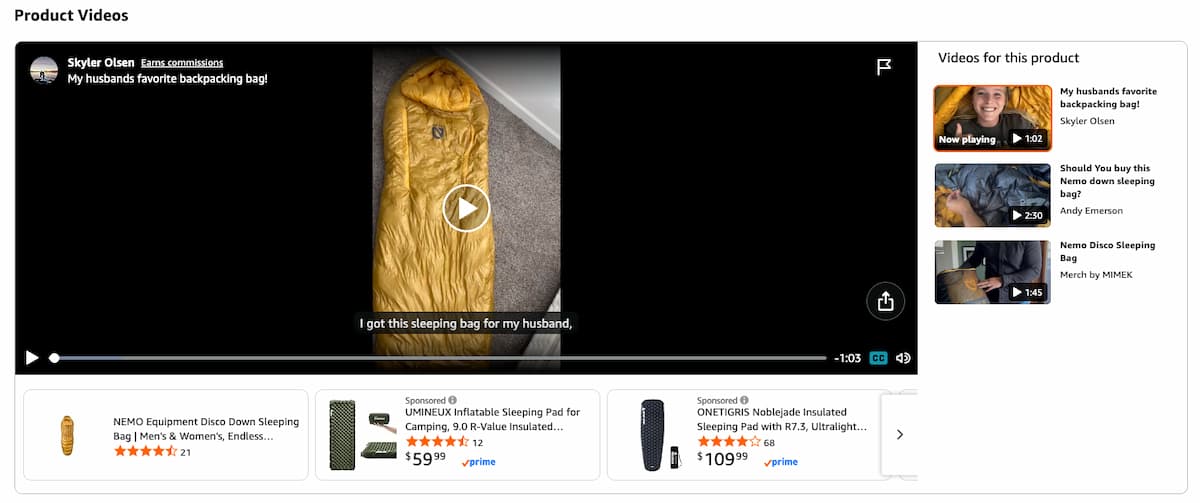
This is the objection that stops the most people, so let us kill it now. Showing your face is not required. Plenty of creators never appear on camera at all.
Think about what the shopper actually wants at that moment. They are not looking for a personality. They are looking for the thing the listing photos will not tell them.
- How big is it really, next to a hand or a coffee mug?
- How loud is it when it runs?
- Does the lid actually seal, or does it dribble?
- How heavy does it feel? How cheap does the plastic sound?
- Is assembly a five minute job or a Saturday?
A phone on a stand pointed down at a table, your hands in frame, your voice explaining what you noticed after using it for a month. That is the whole format. Clear audio matters far more than an attractive face, because the shopper is listening while they scroll the listing.
What you actually need to start
Less than you think, and probably nothing you do not already own.
- The phone in your pocket. Modern phone cameras are more than good enough.
- A window with daylight, or a cheap desk lamp bounced off a wall.
- A stand, a tripod, or a stack of books to keep the shot steady.
- A quiet room. Turn off the fan and the TV. Audio is the number one thing that gets videos rejected or ignored.
- A clean surface. A plain table beats a cluttered counter every time.
Your house is your starting inventory. Kitchen drawer, garage shelf, bathroom cabinet, desk, car trunk, closet. Anything you bought in the last couple of years and genuinely have opinions about is a candidate. You do not need to spend a dollar on products to begin, and you should not.
The two doors you have to walk through
Door one: getting into the program
You apply through Amazon’s affiliate site and connect an active public social account, usually TikTok, Instagram, YouTube, or Facebook. Amazon publishes no official follower minimum and weighs engagement alongside audience size.
In practice that means small accounts with real engagement get approved regularly, while big dormant accounts get declined. If you are turned down, wait the recommended period and improve the account before reapplying. Hammering the apply button repeatedly does not help you.
Door two: unlocking onsite commissions
This is the step most guides skip, and it is where the actual opportunity lives. Getting into the program does not automatically put your videos on product pages. You become eligible once you have uploaded at least three videos that meet Amazon’s content guidelines and completed the onsite signup.
Treat those first three like an audition, because that is exactly what they are. Pick products you know well, film them cleanly, and do not rush them out the same afternoon you get approved.
Beginner mistakes worth dodging
- Talking about price or discounts on camera. Prices change, so keep them out of the video entirely, along with promotions, external links, and references to star ratings.
- Ignoring audio. Echoey bathroom acoustics will sink an otherwise good clip.
- Filming products that do not accept videos. Check the listing first. If there is no video section under the main images, your clip has nowhere to land.
- Chasing hype products. A trendy gadget dies in three months. A dish rack sells forever. Boring and evergreen wins here.
- Buying gear before making anything. Film ten videos on your phone first, then decide if you need a microphone.
- Quitting at video number twelve. This is the big one. The people who make real money are the ones who kept going when the dashboard still said single digits.
Your first two weeks
Week one. Submit your application. While you wait, walk your house with a notebook and list ten products you own and could talk about for a minute. For each one, write three specific things you noticed that the listing photos do not show.
Week two. Pick your three strongest items and film them in one sitting, since setting up once and shooting three times is far easier than three separate sessions. Submit them, then keep filming while you wait for review. Momentum is the whole game.
The reframe that makes it click
Almost every side hustle involving video asks you to become interesting first or find the perfect product first. Build the audience, earn the trust, then monetize. That is a long, brutal road, and it filters out most normal people before they ever earn a dollar.
This one flips the order. Amazon already has the audience and already has the trust. All it asks of you is to be genuinely useful for 45 seconds about something you already own.
That is a much smaller job than becoming an influencer. Which is exactly why the name is the biggest thing standing between most beginners and the opportunity underneath it.
Go look in your kitchen drawer. Your first video is already in there.