Let me be straight with you from the jump: domain flipping isn’t a get-rich-quick scheme, and anyone selling it that way is lying. But it is one of the most capital-efficient side hustles I’ve come across in seven years of testing these things. A $12 registration fee can turn into $500, $5,000, or in rare cases even six figures. The difference between those outcomes comes down to knowing what makes a domain valuable.
I’ve been grinding side hustles since around 2017. Mainly focused on affiliate sites, testing dropshipping stores, YouTube channels, eBooks. As a side hustle in a hustle domain flipping earned its spot in my rotation because the barrier to entry is genuinely low and the upside is perfect to my other online businesses. You don’t need a warehouse, inventory, video equipment, or a huge social following. You need a registrar account, a research habit, and the patience to hold until the right buyer shows up.
This guide is built for beginners, but it doesn’t talk down to you. By the time you finish reading, you’ll understand exactly how to evaluate a domain’s worth, not just guess at it, which is the skill that separates profitable flippers from people who hold a portfolio of domains nobody wants to buy.
Table of Contents
- What Is Domain Flipping and Why It Works
- Research: How to Find Domains Worth Buying
- Acquiring Domains: Registration vs. The Aftermarket
- How to Value a Domain: The Full Framework
- Listing Your Domain for Sale
- Closing the Sale Safely
- Adding Value to Increase Your Sale Price
- Managing Your Portfolio Like a Business
- Realistic Expectations and Timeline
- Your Domain Flipping Checklist
1. What Is Domain Flipping and Why It Works
Domain flipping is the practice of registering or purchasing domain names and reselling them at a profit to buyers who want that specific web address for their business, brand, or project. The core insight is simple: domain names are finite digital real estate. There is one banking.com in the world. One therapy.ai. One payroll.io. If a fast-growing company wants that name and someone else owns it, they have to buy it, and buyers in a hurry pay some insane premiums.
The market for domain names has existed since the early internet, but a few things have made the past several years especially interesting for new flippers:
- New high-value extensions are emerging.
.aidomains have gone from novelty to near-necessity for AI startups..ioremains a developer favorite. This creates windows to register valuable names before demand spikes. - The secondary market is mature and liquid. Platforms like Flippa, Afternic, Sedo, and Dan.com make it genuinely easy to list domains and reach tens of thousands of buyers.
- Escrow infrastructure exists. Services like Escrow.com handle payment and transfer securely, removing the trust barrier that plagued early domain transactions.
- Expired domain auctions are a goldmine. Every day, domains that once had real traffic, real backlinks, and real history expire because owners forget to renew, and you can pick them up for a fraction of what they’re worth.
Honest Pros and Cons
Why It Works
- Low startup cost ($10–$15 per domain)
- No inventory, shipping, or customer service
- Completely passive once listed
- Asymmetric upside of 10x to 1000x returns possible
- Skills compound quickly over time
- Work from anywhere, anytime
Honest Downsides
- Sales can take months or years
- Registration fees pile up on unsold domains
- Easy to buy domains nobody wants
- Trademark risk if you’re not careful
- No guaranteed income timeline
The people losing money in domain flipping aren’t doing it because the market is bad, they’re doing it because they’re buying domains they like instead of domains the market wants.
2. Research: How to Find Domains Worth Buying
This is where most beginners go wrong. They register domain names based on gut feel, a clever pun they thought of in the shower, or a trend they noticed on social media. Sometimes that works. Usually it doesn’t. Systematic research dramatically improves your hit rate.
What Makes a Domain Valuable
Before you can find good domains, you need to internalize what buyers are actually paying for. Here’s my working framework:
| Factor | What To Look For | Impact on Value |
|---|---|---|
| Length | Shorter is almost always better. 1–6 characters is premium. Under 10 is good. 15+ is a red flag. | Very High |
| Extension (TLD) | .com is still king. .ai and .io command serious premiums in tech. .co is respectable. Most others are hard sells. | Very High |
| Brandability | Sounds good when spoken aloud. Easy to spell. Doesn’t require explanation. Think: Slack, Stripe, Notion. | High |
| Commercial Intent | Names tied to industries with money (finance, health, legal, SaaS, real estate) attract buyers willing to pay. | High |
| Dictionary Words | Real single English words in .com are extremely valuable. | High |
| Search Volume | Keywords with high monthly search volume indicate market demand. | Medium–High |
| Hyphens or Numbers | Almost always a hard pass. Makes verbal communication a nightmare. | Very Negative |
| Trademark Risk | Anything resembling a known brand name is legally dangerous and nearly impossible to sell legitimately. | Avoid Entirely |
| Backlink History | Expired domains with real inbound links from reputable sites have SEO value on top of branding value. | Medium–High |
| Prior Traffic | Domains with documented organic traffic history are worth significantly more. | High |
The Research Tools I Actually Use
- Google Trends — Free. Essential for spotting keywords and industries gaining momentum before the market catches on.
- Ahrefs / Semrush — Paid, but worth it. Shows monthly search volume and competition for any keyword you’re considering.
- ExpiredDomains.net — Free database of recently expired domains. Filter by extension, age, and backlink count.
- Majestic / Ahrefs — Check what links point to a domain before buying. High-quality backlinks = higher resale value.
- Namecheap / GoDaddy — Search availability across extensions. Both offer bulk search for researching multiple names at once.
- Wayback Machine — See what a domain was used for historically. Critical for assessing expired domain legitimacy.
- GoDaddy Auctions — Huge marketplace for expired and aftermarket domains. Active auctions give you real-world pricing data.
- Product Hunt / Crunchbase — Watch what categories of startups are being funded and launched. Those industries will have domain demand.
The Niches That Actually Pay
- Artificial Intelligence and SaaS — The hottest category right now.
.aidomains for anything AI-adjacent are commanding serious premiums. - Finance and Fintech — Payments, lending, crypto, investing. High margins and marketing budgets to match.
- Health and Wellness — Telehealth, mental health, fitness tech, supplements. A permanently expanded market.
- Legal Tech and HR Tech — Fast-growing, well-funded, seeking brandable professional-sounding names.
- Real Estate Tech — Proptech is booming. Anything combining real estate vocabulary with tech language does well.
- Climate and Clean Energy — An emerging category with significant VC funding. Worth getting ahead of now.
I frequently track Crunchbase’s recently funded section and Product Hunt’s daily launches. When I notice a cluster of startups in the same category raising money, I research domain names in that space before the rush hits.
– Josh
3. Acquiring Domains: Registration vs. The Aftermarket
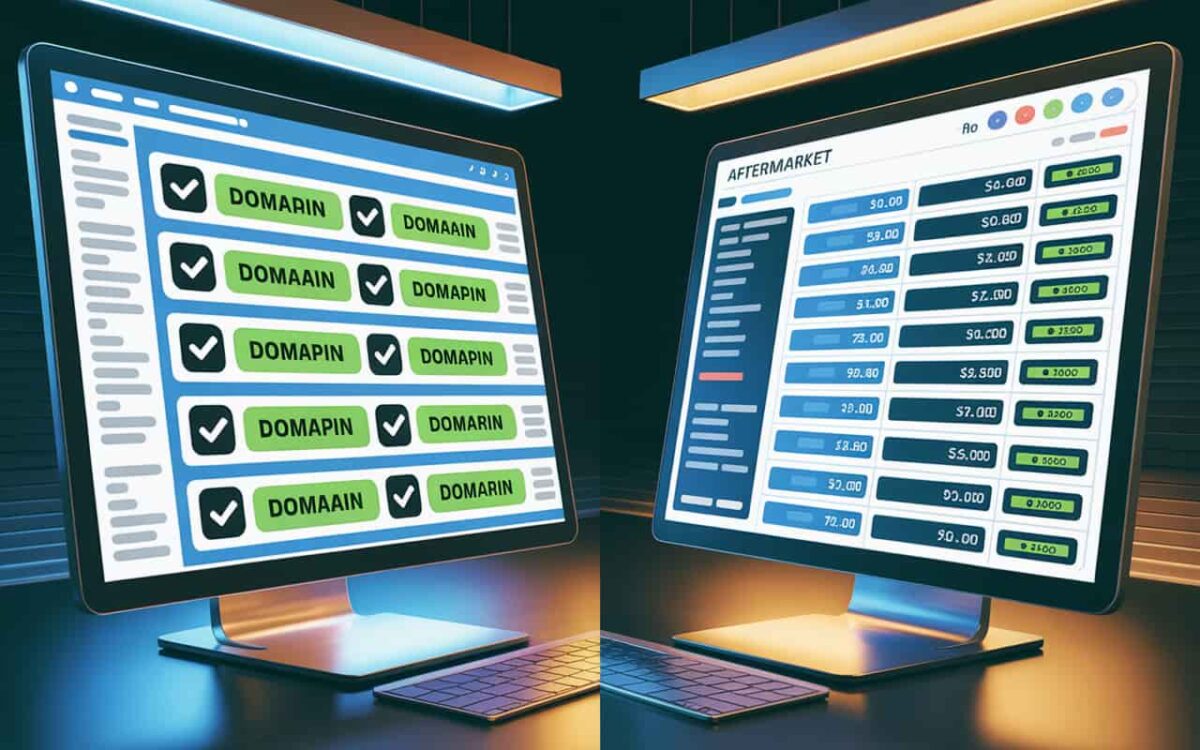
There are two ways to get domains into your portfolio: register new ones, or buy existing ones someone else already owns (the “aftermarket”). Both paths have merit, and the best flippers work both simultaneously.
Route 1: Registering New Domains
The cheapest path. A standard .com registration runs $8–$15/year depending on your registrar. The catch is obvious: most good .com names are already taken. That said, there’s still opportunity if you’re creative:
- Hand-register brandable names before they become obvious. A two-syllable invented word in
.comthat’s easy to say and spell can still be found if you’re systematic. - Target newer extensions like
.ai,.io,.co, or.appwhere the inventory of good names hasn’t been exhausted yet. - Register based on emerging trends before associated keywords become high-demand. This requires genuine market research — but when it hits, the returns are enormous.
Recommended registrars: I use Cloudflare as my primary, transparent pricing, clean interface, and free WHOIS privacy included. GoDaddy works well too, especially if you’re buying expired or auction domains. Hostinger is worth considering for bulk registrations.
Route 2: Expired Domain Auctions
This is where I spend most of my acquisition budget, because expired domains come with built-in advantages that hand-registered names don’t have. When a domain expires, it typically goes through a drop-catch process before becoming available again, but smart flippers catch them at auction first.
Key things to check on every expired domain before you buy:
- Backlink quality and quantity — Use Ahrefs or Majestic. Look at Domain Authority, the number of referring domains, and whether those linking sites are legitimate or spammy.
- Wayback Machine history — What was the site used for? A domain that hosted legitimate content is worth far more than one used for spam or adult content.
- Spam score — Moz’s spam score or Semrush’s toxicity score flags domains that have been manipulated for black-hat SEO. Stay away from high spam ratings.
- Trademark issues — Run the name through the USPTO TESS database before purchasing. Owning a trademark-infringing domain isn’t just unsellable — it’s legally dangerous.
Route 3: Direct Seller Purchases
Sometimes you’ll identify a domain that’s perfect for your portfolio, it’s actively registered and the owner might sell. Send a short, professional inquiry through WHOIS contact information. Keep your first offer neutral, don’t reveal how much you want it. Let them name a price, negotiate from there, and always use an escrow service for any transaction over $500.
4. How to Value a Domain: The Full Framework
This is the section most domain flipping guides gloss over, and it’s the section that actually determines whether you make money. Overpricing kills sales. Underpricing leaves money on the table. You need a real methodology, not vibes.
The hard truth is that domain valuation is more art than science, there’s no formula that spits out the perfect number. But there are evidence-based inputs that, combined with market knowledge, give you a defensible and realistic price range.
Step 1: Run the Automated Appraisal Tools
Start here; not because these tools are accurate, but because they set a baseline and can flag things you missed.
- GoDaddy Appraisal — Free. Uses machine learning trained on historical sales data. Tends to overvalue generic names and undervalue brandable ones. One data point, not gospel.
- Estibot — Paid (limited free lookups). Factors in keyword search volume, CPC, extension value, and length. Better for keyword-based domains, weaker on brandable names.
- NameBio — The most important tool in this step. A searchable database of actual completed domain sales — not estimates, real transactions. Search for similar domains and see what they actually sold for.
I’ve seen GoDaddy Appraisal value a domain at $4,200 that sat unsold for three years, and undervalue a domain at $89 that sold on Flippa for $3,500 within two weeks. These tools give you a starting point. What follows is what actually matters.
– Josh
Step 2: Find Comparable Sales (Comps)
This is the single most important valuation step. Just like real estate agents run comps before pricing a house, you need to find actual domain sales that are comparable to what you’re valuing. Go to NameBio.com and search for:
- The same extension (.com, .ai, etc.)
- Similar length (character count)
- Similar structure (single word, two words, invented word, keyword + word)
- Similar industry or niche
- Sales within the last 12–24 months (the market shifts)
Collect 5–10 comparable sales. If your domain’s characteristics sit between two sold comps, price it proportionally between them. If you can’t find comps, that’s information too — it may mean there’s no established market for that type of name.
Step 3: Apply the Valuation Factors
Once you have your comp baseline, adjust based on the specific characteristics of your domain. Think of it as a structured mental model:
- Start with: Base Value (from comparable sales)
- Add: Extension Premium — .com > .ai > .io > .co > others
- Add: Length Bonus — shorter equals more valuable
- Add: Brandability Score — memorable, easy to say and spell
- Add: Keyword CPC Value — high-CPC keywords signal commercial demand
- Add: Backlink Authority — if expired domain with real links
- Add: Traffic History — documented organic visitors
- Subtract: Niche Specificity Penalty — too narrow means fewer buyers
- Subtract: Age Penalty — for very new domains with no history
- Result: Estimated Market Value
The Extension Hierarchy – What Each TLD Is Worth
| Extension | Market Position | Best Used For | Value vs .com |
|---|---|---|---|
.com | Gold Standard | Any business, universal credibility | The benchmark |
.ai | Premium Emerging | AI/ML startups, tech tools, SaaS | 50–90% of .com (for AI) |
.io | Developer Favorite | Dev tools, APIs, B2B SaaS | 30–60% of .com |
.co | Respectable | Startups, global businesses | 15–35% of .com |
.app | Niche Value | Mobile apps, web apps | 10–25% of .com |
.net | Declining | Tech infrastructure, networks | 5–15% of .com |
.org | Nonprofit Context | Non-profits, community sites | 5–12% of .com |
| Other TLDs | Hard to Sell | Narrow use cases only | Under 5% (mostly speculative) |
Length and Brandability – Why They Matter More Than You Think
Every character you remove dramatically increases the pool of potential buyers. A 15-character domain might appeal to one specific business. A 6-character domain could work for hundreds of different companies. That optionality is worth real money.
For brandability, I run the “radio test” on every domain I consider buying: if someone said this domain name on a radio ad, would listeners be able to spell it correctly and type it in? If there’s any ambiguity, that’s a significant problem. The sweet spot I look for:
- 6–12 characters total (not counting the extension)
- One or two syllables when spoken aloud
- No ambiguous spelling
- Ends on a satisfying phonetic note — “-ly,” “-er,” “-ify,” “-iq,” “-ex” are popular brand suffixes for a reason
- Doesn’t rhyme with or sound like something embarrassing
Keyword CPC – The Commercial Value Signal
If your domain contains a keyword with high advertiser demand, that’s a concrete signal of commercial value. If businesses are paying $15 per click on Google Ads for the keyword “small business loans,” a domain like SmallBusinessLoans.com represents massive potential savings in advertising costs for the right buyer. Use Google Keyword Planner or Ahrefs to find the CPC and monthly search volume for the keywords in your domain. High CPC (above $5) combined with meaningful search volume (above 1,000 searches/month) is a strong positive signal.
Valuing Expired Domains: The SEO Asset Layer
Expired domains with genuine backlink history carry an additional layer of value that’s measurable and meaningful to buyers who understand SEO. Here’s what I look at:
- Domain Authority / Domain Rating — Moz’s DA and Ahrefs’ DR are 0–100 scores indicating link authority. Anything above 30 is meaningful; above 50 is genuinely valuable.
- Number of referring domains — How many unique websites link to this domain? 100 links from 100 different sites is much more valuable than 100 links from the same site.
- Link quality — Links from high-authority sites (established news outlets, universities, industry publications) are worth far more than links from random blogs.
- Anchor text diversity — A healthy link profile has varied anchor text. If 80% of links say exactly the same thing, that’s a manipulation signal.
- Traffic history — Documented organic traffic in Semrush or the Wayback Machine is a strong buying and selling signal.
Expired Domain Value Tiers
- Tier 1 — Premium ($500–$5,000+): DR 50+, 500+ referring domains, clean history, brandable name, good extension. Hunt for these and hold them.
- Tier 2 — Solid ($100–$500): DR 25–50, 100–500 referring domains, verified clean history. Reliable flips with the right buyer.
- Tier 3 — Speculative ($15–$100): Low DR but clean history, some links, decent name. A quantity play — buy ten, sell three or four for enough to cover the rest.
Setting Your Actual Asking Price
Once you’ve done the analysis, you need to translate it into a number. A few principles I follow:
Price for negotiation, not for final sale. Most buyers will try to negotiate. If your absolute floor is $500, list at $750–$900. You look like you’re giving a deal; you end up at a number you’re happy with.
Do not use sky-high anchor pricing unless it’s warranted. Overpricing doesn’t make domains look more valuable — it makes them look unsellable, which they then become. Annual renewal fees accumulate while the domain sits.
Consider Buy It Now vs. Make Offer. If you have strong comps and confidence in your price, use a fixed BIN price — it signals confidence and reduces negotiation friction. If you’re genuinely uncertain of value, “Make Offer” lets the market tell you what it’s worth.
Adjust over time. If a domain hasn’t received a single inquiry in 6 months, lower the price or put it into an auction. The market is always right in the long run.
5. Listing Your Domain for Sale
You’ve done the research, acquired a good domain, and priced it fairly. Now you need to make sure buyers can find it. Passive listing and active outreach work very differently in terms of timeline and price achieved.
The Main Marketplaces
- Flippa — Large audience. Good for domains with traffic or existing websites attached. Best for $500+ domains where the listing investment makes sense.
- Afternic (GoDaddy) — The largest domain marketplace by volume. Listings syndicate across GoDaddy and thousands of partner registrars. Strong for passive sales.
- Sedo — Strong in European markets. Good escrow service. Better for higher-value domains.
- Dan.com — Clean “for sale” landing pages that work on your actual domain. Low commission (9%). Great for mid-tier domains.
- Your Domain’s URL — Set up a minimal “For Sale” landing page on the domain itself. Buyers who type in the URL directly see this first.
Direct Outreach: The Fast Path to Sales
Passive listings work, but direct outreach is how you compress timelines. The idea: identify companies or individuals who would genuinely benefit from owning your domain, and contact them directly.
Step 1: Identify Potential Buyers
Search for businesses in the relevant niche that don’t yet own your domain. A company called “Vault Finance” using vault-finance.net is a qualified prospect if you own VaultFinance.com. Use LinkedIn, Google search, and Crunchbase to find relevant businesses.
Step 2: Find the Decision Maker
You want to reach the founder, CEO, or CMO and not some generic contact form. LinkedIn is your best tool here. For smaller companies, the founder usually handles domain purchases themselves.
Step 3: Write a Short, Professional Message
Keep it to 4–6 sentences. Lead with what you’re offering and why it’s relevant to them. Don’t name your price in the first message. You want a reply; you can negotiate from there.
“Hi [Name], I own [Domain.com] and noticed you’re building [Company Name] in the [space] — I thought it might be a natural fit for your brand. If you’re interested in discussing, feel free to reply here.”
Step 4: Negotiate and Close
When they respond with interest, let them make the first offer if possible. If they ask your price, give a number above your floor and explain the value (comps, search volume, extension quality). Stay calm in negotiation as desperation kills your leverage. Use Escrow.com or Dan.com to handle the transaction securely.
Reality check: Cold outreach for domains has a low response rate, expect 5–15% on a good campaign. That’s normal. Send to 20 qualified prospects and get 2–3 real conversations. One of those could close for a significant amount.
6. Closing the Sale Safely
This section is non-negotiable. Never transfer a domain without payment confirmed, and never send payment without a secure transfer mechanism. Always use escrow for transactions over a few hundred dollars.
Escrow Services
Escrow.com is the industry standard. The buyer deposits funds; you transfer the domain; the buyer confirms receipt; Escrow.com releases funds to you. Neither party can get burned. The fee is typically 0.89%–3.25% depending on transaction size.
Dan.com has built-in escrow that’s particularly clean for domain-only transactions. For very small transactions under $100–$200, PayPal is acceptable with verified accounts, but it carries chargeback risk.
Domain Transfer Process
- Unlock the domain at your registrar
- Obtain the transfer authorization code (EPP code)
- Share this with the buyer or initiate a push transfer within the same registrar if applicable
- The buyer accepts the transfer (typically takes 5–7 days for inter-registrar transfers)
- Funds are released from escrow once the buyer confirms successful transfer
Common Scams to Avoid
- Fake escrow sites: A buyer sends you to “escrow-secure-payments.net” or something similar. Always insist on Escrow.com (the actual domain) or Dan.com. No exceptions.
- Overpayment scams: Someone sends a check for more than your asking price and asks you to refund the difference. Classic fraud. Don’t accept checks for domain sales ever.
- Urgency manipulation: “I need this domain in 24 hours, please send the transfer code and I’ll pay immediately.” No. Use escrow. No exceptions for time pressure.
7. Adding Value to Increase Your Sale Price
One of the most reliable ways to command higher prices is to build something on your domain before selling it. For a pure brandable name with strong intrinsic value, building a site adds little. But for domains that need a story to justify the price, it can make a significant difference.
A Basic “For Sale” Landing Page
At minimum, every domain you own should have a clean, professional landing page indicating it’s for sale. A blank domain with no page looks abandoned. A domain with a landing page and contact form looks like an asset someone is actively managing. Dan.com makes this easy with their parking pages.
Building a Thin Site
For domains in content-friendly niches, building even a basic site with 3–5 original articles can dramatically increase appeal:
- It demonstrates the domain “works” — it can rank, it can host content
- Any organic traffic, even small amounts, becomes a traffic asset you can show buyers
- It makes the domain eligible for website marketplace listings (not just domain listings), which commands a different buyer pool and typically higher multiples
- Buyers can see a vision for the site rather than having to imagine one
Getting Backlinks
A few legitimate backlinks from relevant sources increase the domain’s SEO value measurably. Even two or three quality links from relevant sites can push Domain Authority from 0 to 10–15, which is a real and quantifiable asset for any buyer who cares about SEO. Guest posts, directory listings in your niche, and genuine resource mentions all work without black-hat tactics.
My rule of thumb: if the domain has strong intrinsic value (short, brandable, premium extension), sell it bare and price it on its merits. If the domain needs context to justify the price, spend a week putting a basic site on it. The incremental effort often results in 2–3× the sale price.
~ Josh
8. Managing Your Portfolio Like a Business
Most beginners treat their domain portfolio casually — a loose collection of names they thought were cool at the time. If you want to make real money, you need to run it like a business with actual systems.
Track Everything
Keep a spreadsheet that tracks for every domain:
- Domain name and extension
- Date acquired and acquisition cost
- Annual renewal cost
- Current listing price and platform
- Outreach attempts and responses
- Notes on valuation rationale
- Renewal date — don’t let a good domain expire because you forgot
The Renewal Decision
Every year, every domain in your portfolio forces a decision: renew or let it drop. Do not renew a domain out of attachment. If a domain has been listed for 18+ months with zero serious inquiries at any price point, the market is telling you something. Let it go, or dramatically reduce the price to liquidate.
A portfolio of 50 domains at $12/year each costs $600/year just to hold. That’s capital that could be deployed into better-quality acquisitions. Quality over quantity is almost always the right call.
Portfolio Diversification
I try to maintain a mix of:
- Short brandable .coms — slower to sell, higher ceiling prices, timeless value
- Niche keyword domains — more predictable buyer pool, easier outreach targeting
- Trend plays — higher risk, higher reward, shorter holding period
- Expired domains with history — immediate tangible value, multiple buyer personas
9. Realistic Expectations and Timeline
Domain flipping is a slow side hustle with occasional big wins. The average domain in a beginner’s portfolio sits for 6–18 months before selling, and many never sell at all. The wins happen when you get the right domain in front of the right buyer at the right time.
| Timeline | Realistic Focus | Realistic Outcome |
|---|---|---|
| Month 1–2 | Research tools, study NameBio comps, register 3–5 carefully selected domains | Portfolio established. Probably no sales yet. Learn what you don’t know. |
| Month 3–6 | Start outreach campaigns. List on Afternic and Dan.com. Build one thin site on best domain. | First inquiries. Maybe a first sale in the $200–$800 range if you got the research right. |
| Month 6–12 | Expand portfolio with learnings. Start looking at expired domains with history. | Pattern recognition improving. 2–4 sales. Starting to understand which types of domains sell for you. |
| Year 2–3 | Compound learning. Invest in better-quality acquisitions. Build outreach systems. | Consistent monthly inquiries. Occasional $2K+ sales. Portfolio self-funding with room for profit. |
Out of all the side hustles I’ve run, domain flipping is unique in that it’s completely asynchronous — I can ignore it for weeks and it keeps working in the background. The bad part is that it’s terrible for anyone who needs immediate income. If you need $500 this month, domain flipping is not your answer. If you want to build a low-overhead asset portfolio over 2–3 years that generates irregular but real windfalls, it’s genuinely excellent.
— Josh
10. Your Domain Flipping Checklist
Before You Buy
- Extension check: Is this .com, .ai, .io, or another high-value TLD?
- Length check: Is it under 12 characters? Under 8 is better.
- Radio test: Can you spell it correctly from hearing it out loud?
- Trademark check: Run it through USPTO TESS — any conflicts?
- Wayback Machine: What was this domain used for historically?
- Spam score: Is the backlink profile clean and natural?
- Comp check: Have similar domains sold recently on NameBio?
- Buyer pool: Can you name at least 10 businesses that might want this?
When You List
- Landing page: Does the domain have a “For Sale” page up?
- Listed on at least two marketplaces (e.g., Afternic and Dan.com)
- Outreach list built: At least 10 targeted potential buyers identified
- Price based on comps, not just automated appraisals
- Renewal date tracked and calendared
When You Close
- Using Escrow.com or Dan.com for any transaction over $200
- Domain unlocked and EPP code ready for transfer
- Transfer initiated only after funds confirmed in escrow
- Portfolio spreadsheet updated with sale details
Final Thoughts from Josh
Domain flipping isn’t going to make you rich this month. But it’s one of the most scalable, low-overhead, location-independent income streams I’ve found in seven years of side hustle experimentation — and crucially, the skill compounds. Every domain sale teaches you something about what the market actually values versus what you think it should value. That gap closes over time if you’re paying attention.
The people who fail at this typically make one of three mistakes: they buy domains nobody wants, they overprice what they have, or they buy once and never follow up with outreach. Fix any one of those three and your results will improve. Fix all three and you’ll have a legitimate income stream.
Start small. Pick three well-researched domains. List them properly. Do your outreach. Watch what happens. Learn from what doesn’t sell as much as from what does. That’s the actual path — not a course, not a shortcut, just deliberate repetition with good feedback loops.
If you have questions about specific domains you’re considering, or you want to share what’s working for you, drop it in the comments below. I read everything.
— Josh